
"Monsooned Malabar"
200 article(s) found

Indonesian Coffee Fuyin Manor Coffee Flavor description Grinding degree Taste characteristics Variety treatment method Price introduction
1. Java Coffee, the oldest producing area of Java Coffee in Java, has been famous since the glory days of Indonesian coffee in the 18th century. When it comes to Java coffee, it is still reminiscent of high-quality delicacy, when the most famous blend is Java coffee with Yemeni mocha. In addition, Java also has a very famous old coffee Aged coffee, or monsoon coffee Monsooned.
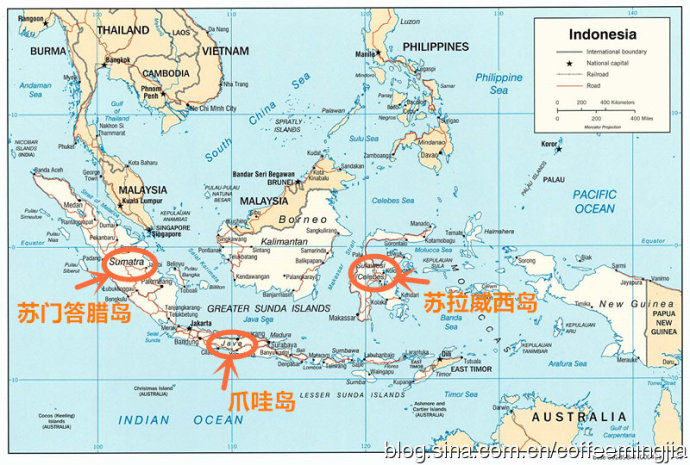
World Coffee Manor production area introduction: detailed introduction of coffee producing country Indonesia Indonesia
Indonesia, the country of Thousand Islands, has the largest number of islands in the world. When it comes to Indonesia, the most familiar is probably the resort island of Bali. A brief History of Coffee in 1696, the Governor of the Netherlands in Malabar, India, gave a batch of coffee seedlings to the Governor of the Netherlands in batavia in Batavia (present-day Jarkata in Jakarta). This was the first time that coffee was grown in Indonesia. But

Cultural History of Coffee beans Coffee History of Southern Asia and Oceania
[India (India)] more than 80% of India's coffee is grown in the southern province of Karnataka, which is often sold under the old name "Mysore". The best Myso beans are thought to be Sumatra drunk by the poor and taste as rich and sweet as secondary Sumatra, but at a lower price. Another kind of "rainy season" (Monsooned Mala)

Common sense of Coffee Culture Coffee History of Southern Asia and Oceania
[India (India)] more than 80% of India's coffee is grown in the southern province of Karnataka, which is often sold under the old name "Mysore". The best Myso beans are thought to be Sumatra drunk by the poor and taste as rich and sweet as secondary Sumatra, but at a lower price. Another kind of "rainy season" (Monsooned Mala)

What kind of coffee do you have in India? How to drink Indian Malaba coffee by hand?
Professional coffee knowledge exchange more coffee bean information Please follow the coffee workshop (Wechat official account cafe_style) in the early years, Indian coffee was transported by sea from the coast of Malaba to Europe, which often took about six months to arrive in Europe. In the long process of shipping, under the influence of sea breeze and monsoon, these coffee beans gradually develop their flavor and color.

The Cultural History of Fine Coffee the Coffee History of Southern Asia and Oceania
[India (India)] more than 80% of India's coffee is grown in the southern province of Karnataka, which is often sold under the old name "Mysore". The best Myso beans are thought to be Sumatra drunk by the poor and taste as rich and sweet as secondary Sumatra, but at a lower price. Another kind of "rainy season" (Monsooned Mala)

What brand of Asian coffee tastes good? introduction to the flavor characteristics of Asian coffee? are Asian coffee beans expensive?
Coffee workshop (Wechat official account cafe_style) Coffee is produced in more than 60 countries around the world, mostly in the tropics and subtropics between the Tropic of Cancer due to geological and climatic requirements, with an average temperature above 20 ℃ and about 1500 meters above sea level. This coffee growing area is called coffee.
Major coffee bean producing areas in the world
Coffee comes from coffee beans, which are harvested and processed from the fruit of trees. Coffee trees grow at the center of the equator, between latitudes of 25 degrees south and north, and are called coffee belts in tropical or subtropical countries. at present, coffee is produced in more than 60 countries. Coffee is produced in South America, Central America, the West Indies, Asia, Africa, Arabia, the South Pacific and
Basic knowledge of boutique coffee major coffee bean producing areas in the world
Coffee comes from coffee beans, which are harvested and processed from the fruit of trees. Coffee trees grow at the center of the equator, between latitudes of 25 degrees south and north, and are called coffee belts in tropical or subtropical countries. at present, coffee is produced in more than 60 countries. Coffee is produced in South America, Central America, the West Indies, Asia, Africa, Arabia, the South Pacific and

Is Malaba Coffee of good quality? is Malaba Coffee good to drink by hand? characteristics of Malaba Coffee treatment
Professional coffee knowledge exchange more coffee bean information Please follow the coffee workshop (Wechat official account cafe_style) it is said that a long time ago, when raw coffee beans were shipped from India to Europe, changes were caused by high temperatures and moisture in the Indian Ocean, and this is where "wind stains" came from. In addition to the expansion and enlargement of the size of the raw beans after wind-soaked, the color of the raw beans is also changed from green to green.
The world's major coffee producing areas introduce the basic knowledge of fine coffee coffee beans represented by all continents
Coffee comes from coffee beans, which are harvested and processed from the fruit of trees. Coffee trees grow at the center of the equator, between latitudes of 25 degrees south and north, and are called the homes of tropical or subtropical countries called coffee belts. At present, there are about 60 coffee-producing countries. Coffee is produced in South America, Central America, the West Indies, Asia, Africa, Arabia, the South Pacific and

What kind of coffee beans are Indian-style Malaba coffee (monsoon coffee)? What kind of flavor?
What kind of coffee beans are Indian-style Malaba coffee (monsoon coffee)? What kind of flavor? Producing area: South India-Karnataka West Gaozhi Mountain Manor: Belakamona Manor Variety: Katim, Kent, S795 Grade: AA altitude: 1100m 1200m treatment method: wind stain Malaba in India is a well-known boutique bean, the treatment process is by people.

Karita extract Indian Malaba has the flavor of plum acid, cocoa, nut and cream.
Professional coffee knowledge exchange more coffee bean information please follow the coffee workshop (Wechat official account cafe_style) Coffee production in Asia is second only to Central and South America. India Nicaea has always been the largest coffee producer in Asia, but this situation has changed greatly in recent years. With the assistance of the World Bank, Vietnam's production expanded rapidly and officially squeezed out of Indonesia in 1999 to become Asia.

How did the Indian wind stain treatment come from? What are the characteristics of Malaba coffee?
Professional coffee knowledge exchange more coffee bean information Please follow the coffee workshop (Wechat official account cafe_style) it is said that a long time ago, when raw coffee beans were shipped from India to Europe, changes were caused by high temperatures and moisture in the Indian Ocean, and this is where "wind stains" came from. In addition to the expansion and enlargement of the size of the raw beans after wind-soaked, the color of the raw beans is also changed from green to green.
Coffee origin Indian monsoon Malaba coffee Indian "monsoon coffee" coffee characteristics
Before the Indian monsoon Malaba Coffee, a tweet about the history of coffee species: it is amazing that 90% of the world's coffee originated from the same coffee tree! It was said that coffee originated in Ethiopia, and Arab businessmen brought it to Yemen, and then a thousand years later, because of a legendary love story, a Yemeni woman risked death to give coffee seeds to the prince of India.

Which brand of Indian coffee is better? What are the recommendations of Arabica coffee beans in India?
Professional coffee knowledge exchange more coffee bean information please follow the coffee workshop (Wechat official account cafe_style) Indian coffee flavor introduction flavor: very little coffee from India, usually only two kinds: wind-stained Malaba and Masojin bricks. The raw beans of the wind-soaked Malaba are dry, yellow and sweet, but a little monotonous because they are placed in a ventilated warehouse for the Indian Ocean

What is Indian Malaba coffee? What is the way to handle Indian coffee? Malaba coffee
Professional coffee knowledge exchange more coffee bean information please follow the coffee workshop (Wechat official account cafe_style) India's wind-stained Malaba coffee, is one of the world's most famous boutique coffee beans, also known as monsoon coffee beans in Taiwan, named after its English name Monsoon (monsoon), his treatment is very complicated and strange, mainly through the earth.

Introduction of Indonesian Coffee Flavor characteristics of manors in Indonesian coffee producing areas Kahayang Gan Manor
The prosperity of coffee in Indonesia was not sustainable, coffee production was fatally hit at the end of the 18th century, and leaf rust, originally found in West Java, spread rapidly, destroying the Arabica coffee estate in Indonesia. The leading position of the coffee trade was replaced by the American producing countries. However, it is worth mentioning that the leaf rust disaster did not affect the eastern Indonesian producing areas, namely, Flores Island and Timor, today.

What are the coffee producing countries in Asia? the spread history of coffee in Asia
Professional coffee knowledge exchange more coffee bean information please follow the coffee workshop (Wechat official account cafe_style) Front Street-A brief introduction to Asian coffee producing areas although Arabs prohibit the export of coffee seeds, they are indeed very open inside. The first coffee houses known as Calvin Kahn opened in Mecca, and for the first time in human history, there was such a place, no matter who it was, only
What are the characteristics of Arabica coffee grown in India
Professional coffee knowledge exchange more coffee bean information please follow Coffee Workshop (Wechat official account cafe_style) Front Street-about Indian coffee there is very little coffee from Arabica, India, usually there are only two kinds of coffee: wind-stained Malaba and Maso gold bricks. The raw beans of the wind-soaked Malaba are dry, yellow and sweet, but a little monotonous because they are placed in a ventilated warehouse for the Indian Ocean